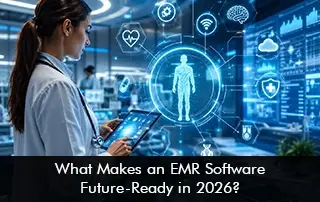
EMR software technology has evolved over the years for the better. Once they were just digital storage cabinets; now they have robust functionalities to improve patient care and streamline daily processes. As patient experiences continue to improve and there is a greater administrative load, practices are looking to invest in EHR systems that can keep up with future needs. So what makes an EMR software future-ready this year? Let’s dive deeper.
Practical AI integrations in EHR Software
Software vendors have continued to openly embrace AI and offer AI tools for clinicians, billers, practice managers, and front-desk staff. The AI must actually work and support clinicians’ everyday workflows and alleviate cognitive load, stress, and physician burnout. The AI tools in electronic medical records software should be simple to use and make valuable impacts when it comes to clinical documentation, identifying care gaps, and suggesting diagnostic codes. EMR software vendors like Epic Systems and eClinicalWorks EHR software provide their users with smart automation features propelled by the power of artificial intelligence. This gives providers more time to focus on healthcare delivery.
EMR Software with Seamless Interoperability
Healthcare has become more connected than ever, and a future-ready EMR system must offer interoperability without any barriers. The last thing a healthcare organization wants is to be stuck with a software platform that doesn’t support care coordination and smooth data exchange between systems.
Strong interoperability empowers providers to access medical data quickly, reduce duplicate testing, and support referrals. Modern software systems follow FHIR standards to make data sharing swift and secure.
Built-In Automation Tools in EMR Software
Tedious administrative and billing tasks remain a grave challenge in healthcare. A future-ready EHR software has automation features that can simplify time-consuming processes like patient scheduling, insurance verification, patient communications, appointment reminders, and prescription refills.
With EMR software automation, the administrative load is reduced, and there are even fewer chances of human errors. This leads to optimized workflows and better user satisfaction. Staff can now take time for other patient services.
Integration of Patient Engagement Solutions
In 2026 and beyond, it is all about providing convenience to patients, just like the banking sector. Patients want to feel empowered and involved throughout their healthcare journey, and this is made possible with patient engagement solutions. The patient portal facility and mobile-friendly tools allow patients to schedule appointments, view lab results, communicate with care teams, and access visit summaries in a flash. Patients who are more involved tend to follow their medication plans, which eventually leads to improved health outcomes.
Leveraging the Power of Cloud
Cloud-based EMR software has taken all the spotlight in healthcare for all the right reasons. A future-ready platform offers cloud-based flexibility that is not offered by on-premise servers. Practices nowadays prefer cloud-based software solutions as they provide automatic updates, better disaster recovery, scalability, and lower hardware costs. EHR software vendor athenahealth is popular for cloud solutions and focuses on connected care.
When assessing an EMR system, practices should go beyond its current feature set and take into account how well it can accommodate expansion over the next five to ten years. A platform that keeps up with technological advancements, evolving legislation, and patient and provider needs is future-ready and ensures practice success.