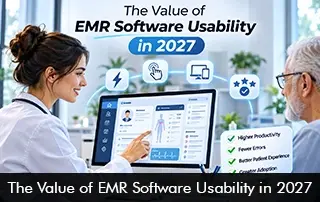
As 2027 is around the corner, it is important to discuss how user expectations have developed for EMR software. Hospitals and practices no longer want an EHR system that has a dozen features that can manage documentation, billing, and patient records. Users expect much more from their platform—they want vendors to prioritize EMR software usability, ensuring their platforms are less complex, make everyday work easy, and fit naturally into workflows.
EMR software usability is a defining consideration in 2027. With enhancements in AI, automation, and interoperability, healthcare technology is advancing. More features can add to provider stress, and the best EMR system is one that can save providers hours and is easy to use. Being a doctor is already a tough job, and the last thing they want is a software that is frustrating to use.
Why Is EMR Software Usability Important?
Electronic medical records software usability directly impacts patient care, clinical efficiency, and user satisfaction. Physicians already have a lot on their plate to manage. From clinical documentation to managing prescribing and reviewing patient records. A complex EMR system user interface can make these tasks even more tedious and take away the time needed for providers to focus on their patients.
The good news is that modern EHR software vendors like athenaOne EMR software and AdvancedMD EHR are addressing these issues and making their platforms more intuitive. With customizable templates, AI agents, and simple navigation systems, they are becoming more user-friendly than before.
EMR software usability makes staff training simple. Straightforward dashboards and intuitive interfaces make new staff comfortable learning the software. Ultimately, this leads to smoother implementation and even reduces training costs.
Why Will EHR Software Usability Still Matter in 2027?
Physician burnout is on the rise, and EMR software usability continues to stay prime even in 2027. Vendors need to introduce new functionalities without overwhelming the user. As systems become more advanced, simplicity should also be kept in mind. The integration of AI tools should make life simple for clinicians and not add additional stress. These tools should be practical and easy to use, so practices can benefit from them. The aim of healthcare technology is not to add more burden but to reduce administrative and clinical pressure through simple automation.
How Are EMR Software Vendors Improving Usability?
Leading electronic health records software vendors prioritize simplifying workflows. Leading this trend, Epic Systems has introduced AI charting tools to turn patient encounters into structured clinical notes. This can alleviate provider stress related to time-consuming documentation tasks.
Joining the bandwagon, the athenaOne AI-native platform aims to make AI simple to use and provide practical solutions. It uses AI to automate documentation, revenue cycle management, and patient communications. This reduces the manual workload of managing these processes and can enhance daily workflow efficiency.
Also, there are some vendors like Practice Fusion and DrChrono EMR software that stand out as being simple and intuitive in nature. Users praise these systems for an accessible interface and note them as mobile-friendly systems to make routine charting hassle-free.
EMR software usability will remain critical for practices to make the most of their platforms. A good EHR software makes documentation easy, reduces administrative duties, and allows clinicians to focus on what they love doing: taking care of their patients.