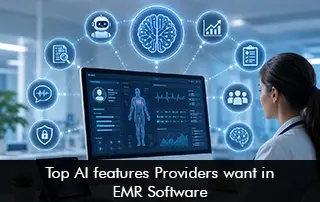
AI integration in EMR software has become a standard functionality and is no longer a futuristic concept. Today, providers are looking for software solutions with practical, smart AI tools to streamline and automate daily processes. Artificial Intelligence has revolutionized healthcare for the better by empowering clinicians to improve patient care and boost health outcomes.
Modern EHR software vendors understand that AI is now fundamental and are ensuring they utilize it extensively to benefit users and, most importantly, combat the grave issue of burnout.
AI Tools Clinicians want in Their EMR Software in 2026
AI-Powered Documentation Tools
Clinical documentation can be a daunting and time-consuming task. It is one of the main driving forces that can lead to fatigue, cognitive stress, and ultimately physician burnout. Fortunately, AI-powered clinical documentation tools in electronic medical record software have been a game-changer, automatically capturing conversations and even drafting notes. In 2026, providers want to have meaningful patient encounters and spend less time on screens. EMR software vendors like AdvancedMD EHR software, eClinicalWorks Software, and many more offer AI-powered documentation tools.
Ambient Listening Technology
In the fast-paced world of today, ambient listening technology works powerfully in the background to listen to conversations and convert them into documentation. The smart listener makes way for natural patient encounters and can reduce pajama time.
Predictive Analytics
Doctors are utilizing predictive analytics in their EMR systems to identify patients at risk. This helps to avoid serious problems and ensures timely intervention to improve health outcomes. Predictive analytics can easily alert patients who are likely to get readmitted, and the robust functionality can also flag complications of patients with chronic conditions. Predictive analytics provides an opportunity for healthcare providers to take a more proactive role in healthcare.
AI-Driven Revenue Cycle Management
Keeping up with financial goals in 2026 is a new challenge altogether. Healthcare organizations and hospitals desire a healthier revenue cycle management. The breakthrough of AI in RCM software can improve revenue collection, predict claims denials, and even identify billing errors. This can reduce the amount of manual effort that goes into managing complex medical billing processes. EMR software vendors like athenaOne EHR software have an AI-native platform with robust AI integrations in their revenue cycle management software that can automate financial workflows.
How is AI Transforming the Patient Experience?
AI’s role is not just limited to providers, but it also expands to enhance the overall patient experience. AI in EMR Software can send personalized messages, follow-up reminders, and medication alerts to patients. These functionalities automate communications and help patients stay engaged throughout their healthcare journey.
How to Evaluate AI Capabilities in EMR Software?
The best AI tools in EHR software are easy to use and implement. Providers can assess AI features by focusing on the following:
- Intuitiveness
- Accuracy in results and clinical documentation
- Seamless integration with current workflows
- Privacy and security
- Vendor support and future innovations
The best EMR software vendor is the one that offers AI tools without much complexity. AI features need to be designed around the needs of users by addressing everyday pain points in healthcare. If you are interested in the growing role of AI, read our latest blog on the Best EMR Software with Advanced AI Tools.