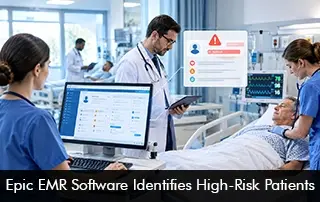
Some healthcare technology breakthroughs are worth praising. To have a meaningful impact on health outcomes, Epic EMR software has leveraged AI to identify patients who are at a higher risk. This creates an opportunity for providers to intervene and help save lives. Most of the time, warning signs are subtle and may only surface when the patient’s health gets out of hand. To resolve this grave issue, the AI tools in Epic software can analyze patient data and look for patterns.
How Does Epic EMR Software Identify High-Risk Patients?
The AI capabilities inside the electronic medical records software are designed to analyze patient data. This information may include lab results, clinical observations, vital signs, and diagnoses. Predictive models can recognize patterns that indicate worse outcomes.
One example that shines brightly is the Epic Deterioration Index (EDI). The EDI provides early warning signs and alerts to clinicians when a patient might be at risk. This robust functionality in the Epic EHR software empowers providers to take a proactive role in patient care. Care teams can receive indications so they can make swift interventions.
It is important to note that the AI technology does not replace the clinician’s judgment. AI is like an extra layer of surveillance—assisting providers to not overlook important clinical deteriorations.
Real-World Use of Epic EMR Software – Detecting Patient Decline
RWJBarnabas Health and Rutgers Robert Wood Johnson Medical School have leveraged the Epic Deterioration Index. Researchers assessed the EDI across 11 hospitals and on more than 23,000 high-risk patients. The results were favorable, highlighting the success of AI tools in improving patient outcomes.
- Deaths among high-risk patients decreased from 21.1% to 18.6% with AI-propelled early warning signs in the Epic EMR system.
- Researchers also found that the AI effectively identified high-risk patients.
This reflects the importance of using the Epic Deterioration Index in hospital settings. The AI does not help with diagnosis, but it can help clinicians notice a red flag before it gets too late.
What Could This Mean for Healthcare In the USA?
The benefits of predictive analytics and AI go beyond predicting high-risk patients. Predictive analytics can be leveraged by clinicians to pinpoint patients who are at a greater risk of hospital readmission and other chronic disease complications. This will create a healthcare system that is not reactive but proactive throughout the patient care journey.
The AI tools in Epic EMR software can help providers identify a patient with diabetes whose condition is worsening. This information can help care teams arrange for quick follow-up and treatment before the patient has to go to the ER.
When predictive analytics technology is carefully used in everyday workflows, Epic EMR software can help the US healthcare system respond quickly and even prioritize limited resources. Epic systems have always been at the forefront of releasing practical solutions that can help manage one of the major pain points and enable providers to deliver high-quality patient care. AI tools in EMR software are creating brand new opportunities to use data in ways that can make a difference in patients’ lives.