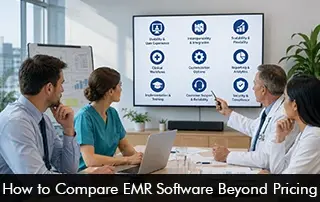
When healthcare organizations start to compare different EMR software, price is usually one of the major concerns. Price is an important factor, since the investment is long-term; however, looking at the cost alone can be misleading. A lower monthly subscription fee for the platform does not necessarily mean lower costs. An expensive EHR system may not make the software perform better. In 2026, the best way to compare EMR software is based on how well the system fits into the practice’s existing workflows.
Define Practice Needs
The electronic medical records software search should start based on practice requirements. This can trim the vendor list to make comparison easier. A solo practitioner, a large academic center, and a multi-specialty practice all have unique requirements for what they desire in the EHR software. For example, a dermatology practice would want a platform with specialty templates and may prefer ModMed EMR software. At the same time, a multi-specialty clinic may prioritize interoperability, centralized reporting, and referral management. Users can create a requirement list before watching demos to help with the comparison and selection process.
Prioritize EMR Software Usability
This year, practices should look beyond the number of features offered by the EMR software vendor. Users should evaluate different systems based on their usability. Usability is a critical consideration, as the last thing a provider wants is to spend hours on the platform. This can frustrate users and take the joy out of their work. The ONC has highlighted usability factors like navigation, number of clicks, alerts, room for customization, templates, and workflow support. An intuitive EMR system will help unlock user efficiency and will empower nurses, practice managers, billers, and providers to complete everyday tasks swiftly.
Compare Specialty Workflows in EMR Software
Not every EHR software handles workflows the same way. Different systems work best for different specialties and practice sizes. For example, ambulatory organizations will be more inclined towards eClinicalWorks EMR software. Whereas a large academic center or healthcare organization may be interested in Epic Systems because of its extensive clinical capabilities and robust integrations.
Consider AI functionalities
Modern healthcare requires EMR software with AI integrations. Users cannot overlook AI features because it is the need of today. EHR platforms should include ambient documentation to simplify and automate daily documentation processes. Smart AI tools should also be available for complex billing processes to pinpoint billing errors before they actually happen. There are a couple of flashy AI demos that can impress potential buyers. Don’t be carried away; instead, ensure that the AI tools are integrated into daily workflows so they can be used easily. For example, the AI-native platform by athenaOne EMR software is available inside workflows for physicians to make meaningful impacts.
Compare EMR software Implementation and Training
The price is one part of the investment. EHR software implementation includes data migration, configurations, and integrations, training, testing, and go-live. A complex implementation process can be a nightmare for most healthcare organizations. The vendor should make EMR software implementation smoother and minimize the need for customization.
Striking the Final Choice
A thoughtful EMR software evaluation looks at all the above factors. Once these factors are considered together, practices will get a complete picture of the EHR platform they are going to invest in. Price is a part of the comparison process, but in reality, the best EMR software empowers clinicians to deliver high-quality patient care and streamlines administrative workflows.