Specialty-specific EHR software systems are designed to meet the unique practice and workflow requirements of different medical specialties. Talking about gastroenterology, the practice is highly unique and requires a gastroenterology EMR software with quality reporting and robust integration with pathology that can meet digestive health workflows. For all these reasons, gastroenterologists can benefit greatly by implementing a gastroenterology system.
A modern platform goes beyond basic patient charting to include endoscopy reporting, RCM, analytics, and AI tools in a single comprehensive solution. Gastroenterology software is becoming critical for practices to boost efficiency and patient outcomes and meet regulatory compliance.
The Scope of Gastroenterology Practices in the USA
GI practices in the USA remain active as more and more patients have gained a greater awareness of preventive care. There is also an increase in colorectal cancer screening programs, and there is a large aging population.
Colonoscopy screening and upper GI endoscopy remain a critical component of GI practices. As patient volumes continue to rise, gastroenterology practices require sophisticated electronic medical records software that can deal with high patient volumes and empower gastroenterologists.
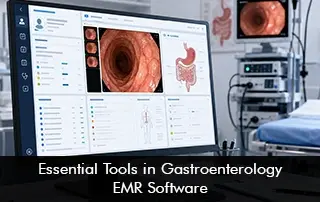
Vital Tools in Gastroenterology EMR Software
Endoscopy Reporting System
One of the most critical functionalities offered by a gastroenterology EHR platform is the integration of an endoscopy reporting system. The system is designed for swift note generation and can handle colonoscopy documentation. The endoscopy reporting feature in the EMR software can benefit providers with photo and image capture.
Gastroenterology-Specific Templates
There are specialty-specific in-built templates available in the gastroenterology software. There are templates for:
- GERD
- IBS
- Liver Disease
- Colon Cancer
- Hepatitis
- Crohn’s disease
- Follow-up for endoscopy visits
These templates, which are not available in a generic EHR software, can make way for faster and more accurate clinical documentation.
Pathology and Lab Integrations
GI clinics need to exchange data with pathology, labs, and other diagnostic facilities. A good gastroenterology EMR software seamlessly integrates with lab and pathology systems, ensuring smoother workflows, electronic lab ordering, and real-time reporting.
Patient Engagement Tools
Patient collaboration features for gastroenterology are important for patient involvement throughout their care journey. The patient engagement software is designed for GI patients to streamline complex processes, such as colonoscopy preparation and preventive screening reminders. Patients can stay active through the patient portal, HIPAA-compliant two-way text messaging, and easy appointment scheduling.
Cloud-based
Modern providers need an EMR system that can work remotely so they can stay on top of patient care and their daily schedules. Cloud-based software allows mobile access so providers can review patient charts, view lab results, and maintain patient communications. This functionality empowers gastroenterologists to work on the go and stay informed.
Top Gastroenterology EMR Software Vendors in the USA
- ModMed – The ModMed EHR software for gastroenterology is called the gGastro EHR system. The gGastro platform is very famous and is implemented by GI clinics in the USA. The software has integrated practice management, specialty-specific templates, Endoscopy Report Writer, RCM, and patient engagement solutions.
- athenahealth EMR software – athenaOne EMR software offers tools for gastroenterology practices that prioritize interoperability and strong revenue cycle management. The platform offers extensive integrations and can be a great choice for large healthcare networks.
- eClinicalWorks – Most suitable for GI clinics that want an affordable EMR system with strong features. The eClinicalWorks EHR software is intuitive and a hassle-free system. The platform is all-in-one with patient engagement, billing, and EHR.