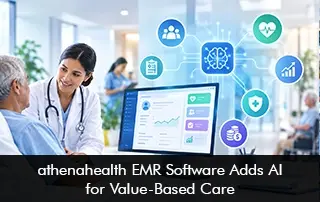
Value-based care is getting more attention in U.S. healthcare. Keeping this in mind, prominent cloud-based vendor athenahealth EMR software has integrated AI capabilities to help practices meet their value-based care goals. This is not just a simple AI add-on functionality for documentation or operational tasks. The AI tools in the athenaOne platform can enable providers to identify care gaps, manage quality measures, and, as a result, make clinically informed decisions.
Announced on 26th September 2026, the new capabilities will use AI and connected data to surface critical data. These functionalities are already in the testing phase. athenahealth EHR software is at the forefront of innovation, making meaningful updates for healthcare organizations to excel.
How can AI in athenahealth EMR Software Support Value-Based Care?
The scale of athenaOne’s EMR software network and the flexibility offered by the electronic health records software both support value-based care. Value-based care models focus on quality patient care and improved health outcomes.
The AI-native capabilities in the athenahealth EHR software can analyze large amounts of data and surface relevant information to care teams in real time. This supports informed decision-making at the point of care. Now, care teams wouldn’t have to sift through large amounts of data manually. The time-saving benefits and better efficiency in overall care are worth noting. The AI smartly points out which patient needs attention, creating opportunities to boost outcomes.
AI Features in athenahealth EMR Software for VBC
Clinically Inferred Diagnosis Gap
This new functionality is currently in Beta testing. The Clinically Inferred Diagnosis Gap reviews patient information in the charts. It then highlights the conditions that may not have been documented. This is a great way to identify any gaps in care. For example, the AI can say, “Hello, doctor, this patient’s chart contains evidence for a certain condition that is not documented, so please check.” So the AI has informed the clinician, and now the provider can review it and see if the diagnosis is correct. It is good to know that AI is not replacing human judgment but supporting it along the patient care journey.
AI Care Event Summaries
athenahealth EMR software is also rolling out AI tools that can help with care management. This is especially important for busy care teams. The AI Care Event Summaries can effectively summarize hospital care events. This can help nurses and doctors understand what happened and also determine the optimal follow-up plan. This functionality is in Alpha. The AI-generated summaries are a great way for care teams to get the complete picture of the hospitalization and identify follow-up care.
Agentic Care Gap Outreach
The Agentic Care Gap Outreach takes a step further by helping care teams take action after finding a particular patient gap. This functionality takes a proactive approach in patient care and empowers care teams to act faster. The agentic AI feature in the athenaOne software can identify patients who need outreach. It can initiate personalized communications and monitor progress.
Why is this Important for EMR Software?
The new announcement by athenahealth EMR software reflects that the role of AI in EHR systems is expanding for the better. Earlier, AI was used to streamline tedious documentation, billing, and patient scheduling processes. Now, AI in EMR software is becoming the star of the show, helping drive the shift toward value-based care. The use of AI can help clinicians turn a massive amount of healthcare data into valuable insights for high-quality care.