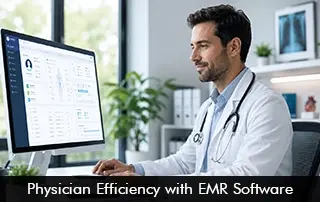
Provider efficiency is a major priority in healthcare. Thankfully, with EMR software solutions replacing traditional workflows, clinicians can spend more time on their patients and less on paperwork, documentation, and searching through patient files. Modern software platforms have gone beyond digitizing records; they offer robust tools to automate and streamline clinical, financial, and administrative processes. According to the ONC, 96% of non-federal acute care hospitals have utilized a certified EHR system. This universal adaptation has made way for effective healthcare delivery.
Physician Challenges before Automation with EMR Software
Before electronic medical records became mainstream, physicians were burdened with a lot of manual work; these tasks included,
- Going through paper files before patient visits.
- Writing hand-written notes.
- The need to fax referrals.
- Calling pharmacies for prescription renewals
- Monitoring patient follow-ups manually
The manual processes were slow, tedious, and even error-prone. EMR software has literally transformed everyday workflows, reducing delays in care and even in communications.
How can EHR Software improve Provider Efficiency?
Swift Documentation
The load of daily clinical documentation can strain providers with added cognitive load and after-hours work. Software providers like athenahealth EMR software and AdvancedMD EHR software empower users with specialty-specific templates, AI-assisted documentation, voice dictation features, and predictive text suggestions. The smart automation leads to meaningful patient and provider encounters and can even enhance documentation accuracy.
Quick Access to Patient Histories
Imagine a patient comes into the ER with a serious condition. There is no time to waste for the doctor to sift through and find the patient’s medical history, as the patient’s life is on the line. Understanding the urgency of quick access to medical data, EMR systems provide immediate access to allergies, past patient visits, medications, immunizations, etc. Having all critical information available in front of care teams, they can deliver care without friction and boost health outcomes. Within seconds, providers have the information they need in front of them.
Integrated CDS tools
CDS features in EHR software like Epic Systems can alert clinicians about drug allergies, preventive care reminders, and abnormal lab results. These tools support evidence-based care and work quietly in the background to support the provider’s efforts.
Alleviate Administrative Burden
Comprehensive EMR platforms include solutions for patient engagement, practice management, and medical billing. With these systems in action, repetitive tasks are simplified for billers, practice managers, and front-desk staff members. There are automatic appointment reminders, electronic communication, coding suggestions, and insurance verification features.
AI in EMR Software Leading to Better Physician Efficiency in 2026
AI is no longer experimental in the healthcare landscape; AI is being integrated into EHR software, making it practical and more available in 2026. The progress in AI solutions has addressed pain points of clinician stress, burnout, and inefficient processes. AI functionalities like ambient note generation, chart summarization, intelligent search options, and diagnosis suggestions work like magic for healthcare providers. If you want to know more about these amazing AI features, read our blog on the Top AI features Providers want in EMR Software.
Physician workload is being greatly reduced with intuitive workflows, mobile-friendly platforms, and AI solutions to support everyday productivity and optimize tasks. A healthier work-life balance can keep providers more satisfied and keep their hearts and minds solely on their patients.