Time is gold when it comes to emergency care. When a patient calls 911, they need immediate help, and paramedics have to make quick care decisions before the patient reaches the hospital. In most cases, the hospital ER may know little about the patient’s condition. This is where EMR software integration with ambulance data becomes critical. The connection between emergency medical services (EMS) and electronic medical records software allows teams to share key patient information before arrival. This can reduce gaps in care and help the emergency department respond confidently.
How Does EMR Software Integrate Ambulance Data?
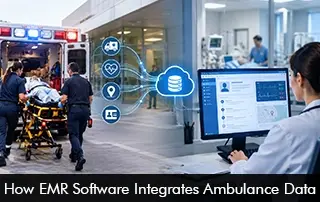
To enhance emergency care, ambulance data integration with hospital EHR software is required. Ambulance data integration connects the systems paramedics use with the EMR system. During an emergency, paramedics record patient vital signs, symptoms, and other details in an electronic patient care reporting system. Via the integration, all this information can be securely shared with the hospital in real time while the ambulance gets to them.
Hospital teams can prepare the required specialists and medical equipment before the patient arrives. After the patient handoff, the ambulance documentation can be added to the hospital documentation or the patient’s charts.
Data exchange standards such as HL7 and Fast Healthcare Interoperability Resources (FHIR) can support the seamless sharing of information between different systems. The precise exchange method depends on the EMS vendor and the system used by the hospital.
Real-World Examples of Ambulance-to-Hospital Interoperability
Carilion Clinic in Virginia presents a real-world example of ambulance-to-hospital interoperability. Earlier, when the paramedic transported a patient to Carilion Clinic, they recorded all patient details in their ambulance software. The main issue was that the hospital couldn’t receive this information electronically, so staff members had to print the ambulance report and scan it. This resulted in inefficient workflows and took extra time and effort.
Now, Carilion Clinic has started using ImageTrend and Epic EMR software together. ImageTrend is the software used by paramedics in the ambulance to record the patient’s information. Epic Systems is the software used by the clinic to store and record patient details. Via the ImageTrend Health Information Hub, the ambulance data record is transmitted to Epic software.
With this smooth integration, hospital staff can access the reports easily without having to print and scan them. A lot of administrative time is saved, and patient records can be easily updated as well. With this system, 20,000 EMS reports were received in the first year.
Oracle Health EMR software is another hospital electronic health records software. Through integration capabilities like the ImageTrend Health Information Hub, paramedics can easily send reports electronically in the Oracle Health software. This can help emergency staff at the hospital to prepare before the patient arrives. Having access to critical information can help providers make the right treatment decisions at the point of care.
Better Emergency Care with EMR Software Ambulance Data Connection
We can see that integrating ambulance data with EMR software is of paramount importance for connected emergency care in the USA. Disconnected systems and paperwork are a thing of the past. With improvements in interoperability and standardized data exchanges, we can expect paramedics and hospital care teams to feel more empowered to deliver quality care where every minute counts.