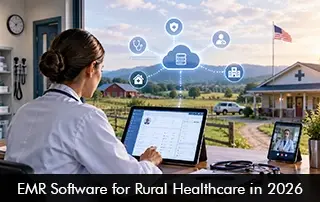
Rural healthcare has a certain set of challenges. With limited resources, budgets, and rising costs, rural clinics and hospitals still need to ensure quality patient care. To help support the effective operation of small clinics and hospitals, many have implemented robust EMR software technology. Through better care coordination, quick access to patient records, telehealth, and CDS tools, rural health providers can feel empowered even with a limited set of resources.
Rural hospitals must utilize an EHR system that can meet their requirements and budget. Luckily, there are EMR software vendors in the market that can support rural hospitals and clinics. This can reduce disparity in care and ensure the needs of patients are met regardless of area and place.
Why Does Rural Healthcare Need EMR Software?
The clinical demands of rural hospitals are the same as those of urban hospitals. Providers need to coordinate care with other specialists, departments, labs, and pharmacies. They also need to manage the administrative side, including patient appointments, reminders, and billing. Without proper electronic medical records software in place, rural hospitals can face operational inefficiencies and lags in patient care.
To automate and streamline patient scheduling, billing, and documentation, rural clinics need EMR software. When processes are managed, providers have more time to give to their patients. The clinical capabilities in the software, such as e-Rx and CDS tools, and powerful integrations can ensure patients receive high-quality care. The real-time availability of patient records can help providers make sound decisions at the point of care. Furthermore, to enhance accessibility, telemedicine EMR software can be used. These virtual care sessions can prove fruitful, especially for non-urgent issues and patients who have mobility problems.
The goal is not only to digitize patient records but also to provide a complete environment for nurses, staff members, and clinicians to deliver coordinated and holistic care even with limited resources.
Top EMR Software Vendors that Support Rural Healthcare in the USA
MEDITECH Expanse
MEDITECH Expanse EMR software has positioned itself as a vendor that supports community and rural hospitals. The all-in-one Expanse platform maintains clinical documentation, ambulatory care, and hospital workflows.
Rural providers and hospitals continue to show their interest in MEDITECH EHR software. The vendor reported that 15 rural hospitals signed on to Expanse in 2025. The Palo Plinto General Hospital in Texas has implemented the MEDITECH Expanse solution to manage workflows and patient records for its six clinics, which include a mobile clinic. The mobile clinic is like a small hospital on wheels that visits schools and smaller communities. This is a great example showing how rural hospitals can bridge care gaps and even improve care continuity.
Epic Systems
To help small rural hospitals connect with large health systems, Epic EMR software shines brightly. Through Community Connect Partnerships, smaller hospitals can access the robust technology that is used in larger healthcare organizations. This provides a great opportunity for rural hospitals to use the extensive EMR system without having to build and maintain the platform independently.
The Future of Rural Healthcare with EHR Software
Healthcare technology can support modern healthcare delivery. With advancements in FHIR and other data standardization health information exchanges, we can expect rural healthcare to get more connected. AI is an interesting breakthrough that can have meaningful impacts on the way rural healthcare providers document. Patient volumes can be high, and providers are already strained with limited staff. Ambient AI documentation features in EMR software can automate everyday documentation and charting tasks. This can help clinicians keep burnout at bay.
The right EHR software for rural hospitals should offer cloud connectivity, strong integrations, telehealth, billing, and reporting tools in 2026. These functionalities can open new doors to reduce health inequity.