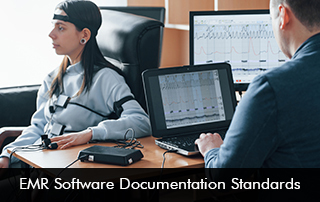
Just as there are security standards in Electronic Medical Records (EMR) Software there are also documentation standards. The documentation standards in EHR Software systems help ensure patient data’s accuracy, completeness, and security. Better patient care, regulatory compliance, and more efficient data sharing are made possible by these standards. Uniformity is maintained among various healthcare providers […]
Continue reading
Today the healthcare sector is becoming more interconnected. This has demanded healthcare providers exchange crucial health data for care collaboration between specialists. Electronic Medical Records (EMR) Software Systems enable connectivity and seamless interoperability between different systems. This can improve workflow efficiency and patient care. Coordinated healthcare is the key to empowering clinicians to enhance patient […]
Continue reading
Electronic Health Records (EHR) Software systems facilitate real-time patient health data exchange between providers. Most healthcare organizations in the United States have deployed EMR Software technology – According to statistics the electronic health records software market value is estimated to grow to 47 billion US dollars in 2027. This growth reflects that providers, hospitals, and […]
Continue reading
Interoperability is the ability of the seamless share and transfer of healthcare data between Electronic Medical Records (EMR) Software systems to enhance care coordination for improved patient outcomes. The global pandemic, COVID-19 has stressed the importance of health data and hence it’s the right time for the interoperability and patient access rule. What are the […]
Continue reading