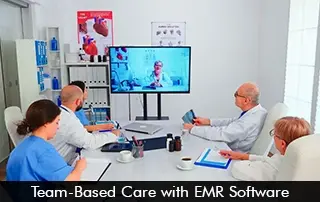
The technology of EMR software helps teams work better together. Healthcare is not a solo show, but it requires smooth coordination between providers, nurses, specialists, and pharmacists to deliver high-quality patient care. In an environment where communication matters, EHR systems help to bridge any gaps in care, so the right information is available to the right person at the right time.
Why Is Team-Based Care Essential?
Modern healthcare means that everyone is involved in the patient care journey. Electronic Medical Records (EMR) software vendors like athenahealth EMR software, Epic Systems, and many more have built a flexible platform where all patient information is available easily and can be shared securely through interoperability options.
When information is readily available in the EHR system, healthcare can expect the following outcomes:
- Errors can be reduced to make way for patient safety.
- Leads to smoother workflows.
- Smarter and more accurate decisions can be made at the point of care, which can be lifesaving.
- Patients are offered better care.
How does EMR software encourage collaboration between teams?
Gone are the days when patient files are only available in the provider’s drawer. With Electronic Health Records software, patient data and charts can be easily accessed by authorized nurses, specialists, and lab technicians in real time. This availability of information ensures that everyone in the care team is on the same page and has all the precise information to deliver the best care.
The latest EMR software solutions, like AdvancedMD EMR software, integrate seamlessly with lab software, pharmacy systems, and imaging machines. This can break down information silos, and all patient results and any alerts can flow directly into the patient charts. Nothing is missed, and with this integration, every clinician gets the same data to access.
Do you remember the pager era? Now EHR systems have built-in HIPAA-compliant communication tools inside the patient chart. Any message can be delivered quickly for swift response times. This feature also enables keeping documentation centralized.
EMR Software Interoperability is the Future
One of the most difficult issues in the U.S. healthcare system has been the problem of data silos. However, current EMR system providers are increasingly focusing on interoperability standards such as FHIR and health information exchanges.
This means that a hospital running Epic Systems software can securely share patient information with another facility running a different software system, making it easier for specialists to work together across state borders. The high interoperability standards ensure seamless data exchange and care coordination.
Furthermore, with the rise of telehealth, EMR software now allows virtual consultations, remote access to patient charts, and collaborative documentation for teams of caregivers. This creates an avenue for teams that work strongly together to support better outcomes.