
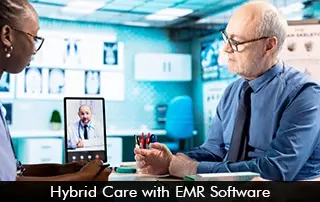
Modern healthcare demands hybrid care, and thanks to EMR software, it can seamlessly facilitate a blend of virtual and in-person care. Today, patients want the flexibility and convenience of both quick online consultations from home and in-clinic visits when needed. This choice keeps patients satisfied; hence, hybrid care models are taking center stage in 2026. EHR software technology supports hybrid care that is both effective and efficient.
Why is Hybrid Care Important in the US Healthcare System?
Hybrid care is becoming the backbone of healthcare in the US. Many patients, due to geographical barriers or mobility issues, are unable to receive high-quality patient care. With a hybrid model, patients can receive care remotely, expanding access to care for everyone. After all, everyone deserves to get checked and treated.
Some patients prefer remote consultations, and integrating telemedicine into Electronic Medical Records (EMR) software allows providers to see their patients remotely. Telehealth usage rates continue to rise among Americans because it fits their needs, and the platforms are becoming more intuitive.
To alleviate hospital strain from staff shortages and high patient volumes, hybrid care can be a savior. Hybrid care can be used to triage patients virtually, which can reduce unnecessary hospital visits.
EMR Software Features that can support Hybrid Care
Modern EHR systems can empower hospitals and clinics to manage both in-person and virtual care with the following tools:
Telehealth Integration
Telemedicine EMR software supports smooth virtual sessions between patients and providers via their smartphones or tablets. Mostly, these sessions are HIPAA-compliant for maximum patient privacy and security. During these video visits, screen sharing is also possible. Telehealth is being used more often and can offer primary care for many conditions. According to the American Hospital Association, the platform has proven to satisfy both providers and patients, as it is safe and effective.
Patient Portal software and Mobile Apps
Patient Portal EMR software tools can help patients stay engaged between visits. Via the patient portal platform, patients can schedule appointments, view lab results, and message providers in a breeze. It can be reassuring to know that healthcare is focusing on patient engagement solutions that actually work.
Care Coordination Tools
EMR systems provide an interoperability framework for seamless care collaboration and data exchange. Hybrid care involves different providers and specialists, and EHR software can help care teams stay on the same page and share critical data in real time.
What EMR software vendors are doing for hybrid care?
Prominent EHR software vendors understand the shift towards hybrid care and are investing in tools that can support it. Epic EMR software has significantly expanded its telehealth capabilities and patient engagement tools, which allow providers to conduct virtual consultations and remote patient monitoring inside the electronic health records software.
To help manage hybrid care efficiently, athenahealth EHR software has utilized AI-propelled workflows with telehealth sessions and patient messaging. Furthermore, eClinicalWorks EMR software has hybrid care models that support primary care and specialty practices. The EMR system is a comprehensive platform with telehealth, patient mobile apps, and remote monitoring tools.
The Future is Hybrid Care
The future of healthcare is hybrid care supported by EMR software. Providers can combine in-person and remote care to offer the best care possible. In 2026, hybrid care models will be a standard healthcare delivery model, leading to personalized care and improved chronic disease management, which can benefit healthcare at large.