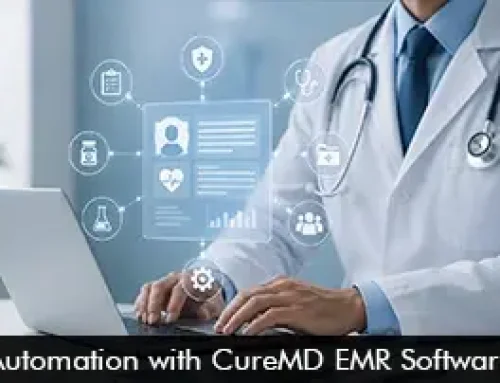

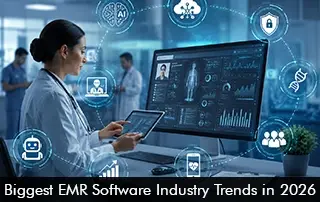
EMR Software has evolved for the better. The healthcare sector for years has been focused on replacing paper records with digital patient records. In 2026, technology is getting smarter and more intelligent with the integration of features that empower providers like never before.
This year providers are concerned about whether their existing EMR System is smart, connected, and flexible enough to meet the challenges of healthcare in the coming years. 2026 is a whole new year for EHR software—with automation, AI integrations, and robust interoperability to offer high-quality patient care.
EMR Software Industry Trends Defining 2026
AI-Native Solutions
In 2026 we will see a major transformation in electronic medical records software by being AI-native. This has now become a standard pushing software vendors to redesign the clinical workflow around AI. Integrating AI tools into older systems is no longer a technological trend.
A core example of this is athenahealth EMR Software’s AI-native clinical encounter. The vendor is smoothly embedding artificial intelligence into the provider experience with ambient documentation, AI copilots, chart summarization, and intelligent workflow automation.
Ambient Documentation
EMR systems have become all about ambient documentation. Instead of inefficient manual documentation processes, users in 2026 rely on ambient listening tools. This can automatically generate documentation, reducing charting time.
The good thing is that providers are responding positively to ambient documentation solutions, as they are solving the issue of burnout related to tedious clinical documentation.
EHR Software Interoperability has become a reality
Finally, interoperability has become real. In 2026, API standardization, TEFCA frameworks, and regulatory pressure are pushing vendors to take proactive steps for stronger and more secure data exchanges. A connected ecosystem can make way for seamless care coordination and reduce any gaps in care.
EMR Software vendors like Epic Systems are working to enlarge the API ecosystems and external integrations
Modern Software Automate RCM Processes
Modern EHR platforms integrate revenue cycle management solutions to automate complex billing tasks. The use of AI can eliminate the chances of human errors with tools for insurance verification, denial prevention, and coding assistance.
This trend has come strongly because healthcare organizations are under great financial stress. EMR software has evolved to include billing tools to streamline clinical and medical billing tasks. In 2026, practices will no longer need to invest in another billing software program.
Integration of RPM Tools
Electronic medical records software has become more accessible and flexible to offer care beyond the hospital walls. This is made possible through remote patient monitoring integration. This functionality enables data to flow smoothly into EMR Systems from smartwatches, telehealth solutions, home monitoring devices, and mobile health apps.
2026 and Beyond – EHR Software Getting Powerful
In 2026 and over the years, we can expect EMR Systems to shine brightly with stronger interoperability, better workflow automation, and AI solutions that give tangible results. These enhancements can address the many pain points of physician burnout, inefficient workflows, and increased financial stress so practices can focus on their patients to offer holistic care.