
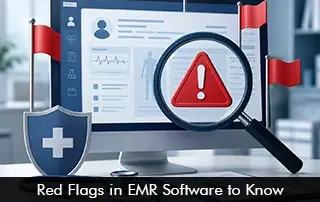
Healthcare organizations and practices have implemented EMR Software to support modern healthcare delivery. Over the years these systems have evolved from just being digital storage hubs to robust solutions that are designed to streamline everyday workflows. However, sometimes an EHR system might not work as efficiently as promised, and this could lead to user frustration and slower processes.
If you are evaluating your current EMR system, then you have landed at the right place. In this guide we have shared the glaring red flags and also practical solutions that can help practices overcome the many challenges this year.
Complex EMR Software User Interface
Users of Electronic Medical Records (EMR) Software usually complain of poor usability. This makes it difficult for staff members to even complete the simplest of tasks because of slow loading times, cluttered dashboards, and needless fields. Complicated systems can lead to stress and eventually burnout.
The Solution
To overcome this roadblock in practice efficiency, it is advised to select an EHR system that is designed around clinical workflows. Modern EMR platforms like AdvancedMD EMR Software offer simple navigation, clean interfaces, and mobile-friendly access. Smart buyers of healthcare technology always watch live demos to see how the software actually works.
Fragmented Interoperability
Disconnected systems lead to inefficient workflows. Lack of interoperability is a red flag that cannot be ignored. An EHR Software that lacks interoperability will result in missing patient records, delayed results, and lack of integration.
The Solution
Always select an electronic health records software that supports interoperability standards like HL7 and FHIR APIs and integrates seamlessly with pharmacies and labs. Software vendors like Epic Systems are known for their robust interoperability for seamless care coordination.
Unexpected EHR Software Costs
With healthcare already drained under high costs, the last thing a hospital wants is to be surprised by unexpected hidden costs. These costs can be in the form of setup charges, training fees, data migration charges, and software update fees. These costs can impact the original budget.
The Solution
Always request a complete pricing structure and breakdown from the EMR Software vendor. Many vendors now prioritize price transparency to start reliable partnerships. Avoid vendors that are hesitant in providing their complete cost breakdown.
Poor Data Security
Patient health information is sensitive and is a major target of cyber-attacks. An EHR System that does not follow strict security protocols may make data even more vulnerable. Be on the lookout for the following security warning signs:
- Zero audit trails
- Irregular software updates
- Outdated encryption methods
The Solution
Go for an EMR Software that takes security seriously. An EMR system should offer complete encryption. Role-based access controls and should comply with HIPAA laws. Robust security is offered by athenahealth EMR Software, CareCloud EHR System, and more.
The Right EMR Software Does the Trick
The whole point of implementing Electronic Medical Records software is to streamline workflows and empower providers. Complicated systems that are not compliant only pose a threat to healthcare organizations. By knowing these red flags, practices can steer clear of inefficient technology and make better EHR Software purchase decisions.